The harmonium is one of the most accessible and versatile instruments in Indian classical, semi-classical, and devotional music. Whether you want to accompany bhajans, kirtans, or learn classical ragas, a structured practice routine will help you progress steadily and enjoyably.
This complete practice guide covers posture, bellows control, basic scales (thaats), finger exercises (alankars), daily routines, and common mistakes to avoid.
1. Proper Sitting Posture and Hand Position
- Sit comfortably cross-legged on the floor or on a chair with a straight back.
- Place the harmonium in front of you at a comfortable height.
- Right hand: Plays the melody (keys). Keep fingers naturally curved, relaxed, and close to the keys.
- Left hand: Operates the bellows. Maintain steady, continuous pumping.
Good posture prevents fatigue and allows better breath-like control of the sound.
2. Mastering Bellows Control (The Most Important Skill)
The quality of your sound depends almost entirely on steady bellows pressure.
Beginner Bellows Exercises:
- Hold a single note (Sa) and pump the bellows smoothly for 20–30 seconds without volume fluctuation.
- Practice long, even strokes — avoid jerky or uneven air flow.
- Aim for a continuous, singing tone rather than a choppy sound.
Practice bellows control daily for at least 5–10 minutes before anything else.
3. Learning the Swaras (Notes)
The seven basic notes (Saptak) on the harmonium are:
Sa Re Ga Ma Pa Dha Ni Sa
In the natural scale (Bilawal Thaat / similar to C major):
- Sa = C
- Re = D
- Ga = E
- Ma = F
- Pa = G
- Dha = A
- Ni = B
Locate middle Sa on your harmonium and practice finding all the notes without looking.
4. Essential Daily Practice Routine (20–40 minutes)
Warm-up (5 minutes)
- Steady bellows on Sa
- Slow Sa–Pa–Sa drone
Scale Practice (8–10 minutes)
Start with Bilawal Thaat (all natural notes):
Ascending: Sa Re Ga Ma Pa Dha Ni Sa
Descending: Sa Ni Dha Pa Ma Ga Re Sa
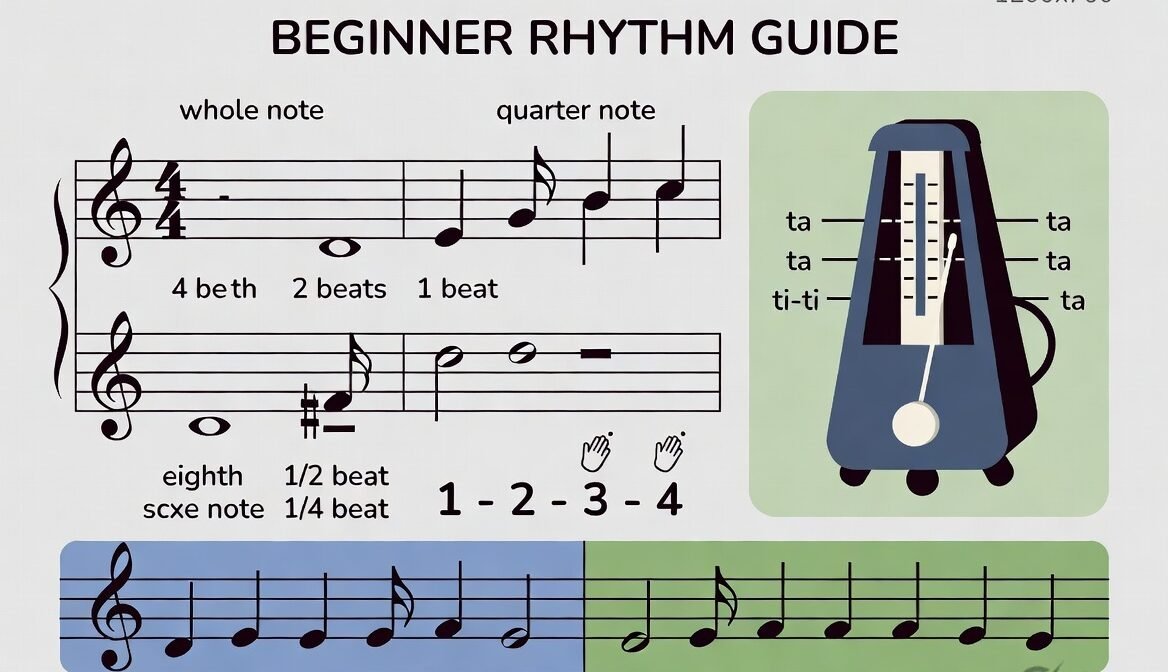
Play slowly and evenly. Use a metronome if possible (start at 50–60 BPM).
Gradually add other beginner-friendly thaats such as:
- Khamaj
- Kafi
- Bhairav (once comfortable)
Alankar / Palta Practice (8–10 minutes)
Simple finger exercises that build speed, accuracy, and coordination:
- Sa Re Ga Ma | Ma Ga Re Sa
- Sa Re Ga | Re Ga Ma | Ga Ma Pa (and reverse)
- Sa Ga Re Ma | Ga Pa Ma Dha (skipping patterns)
Always sing the sargam (note names) while playing. This trains your ear and voice together.
Application (5–10 minutes)
- Play simple bhajans or film songs you know.
- Practice a short raga phrase or bandish if you are learning classical music.
- Experiment with basic chords (Sa-Ga-Pa) for accompaniment.
5. Progressive Learning Path
Month 1 – Foundation
- Perfect bellows control
- Bilawal scale in both octaves
- Basic alankars
- 2–3 simple bhajans
Month 2–3 – Expansion
- Learn 3–4 thaats
- Improve speed and smoothness of alankars
- Start simple chord accompaniment
- Begin one easy raga (e.g., Yaman or Bhairav)
Month 4+ – Musicality
- Dynamics (soft and loud playing)
- Ornamentation (meend, kan, etc. if learning classical)
- Playing while singing
- Different playing styles (melody only, melody + drone, chords)
6. Important Practice Tips
- Consistency beats duration — 20 focused minutes daily is better than long irregular sessions.
- Always sing along with the notes (sargam).
- Practice both ascending and descending movements equally.
- Record yourself occasionally to track progress.
- Keep your fingers relaxed — tension creates poor tone and fatigue.
- Clean the reeds and check for air leaks periodically.
7. Common Beginner Mistakes
| Mistake | How to Fix |
|---|---|
| Uneven bellows | Practice long sustained notes daily |
| Looking at keys too much | Practice scales with eyes closed |
| Stiff fingers | Keep a natural curve and light touch |
| Playing too fast too soon | Slow practice builds better technique |
| Neglecting the left hand | Treat bellows control as equal priority |
| Not singing while playing | Always vocalize the notes |
8. Recommended Resources
- Tanpura or electronic shruti box app for drone reference
- Metronome app
- Simple notation books or YouTube channels focused on harmonium basics
- A good quality student harmonium with responsive reeds
Final Thoughts
The harmonium rewards regular, mindful practice. Focus first on producing a beautiful, steady tone with the bellows, then build accuracy and speed through scales and alankars. Once the basics feel natural, the instrument becomes a powerful tool for expression — whether you are singing bhajans, exploring ragas, or accompanying others.
Start today with just 15–20 minutes of focused practice. Within a few weeks you will notice clearer notes, better control, and growing confidence.
Keep the bellows steady, the fingers relaxed, and the mind attentive. Happy practicing!