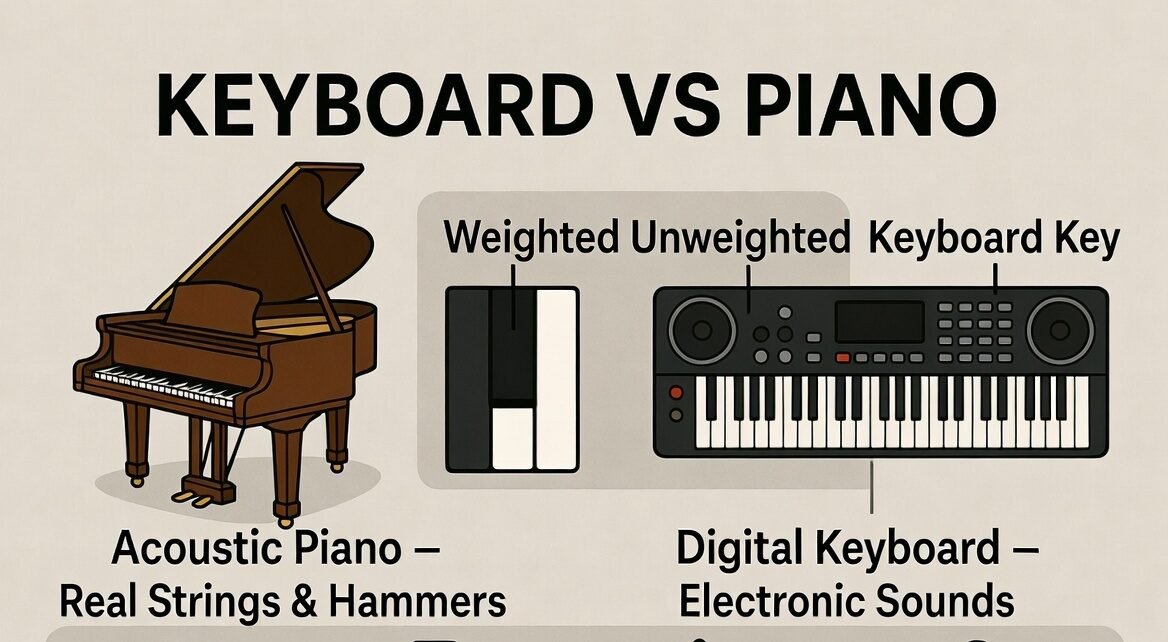
Choosing between a keyboard and a piano is one of the first big decisions for new musicians. Both instruments share the same basic layout of black and white keys, but they differ significantly in sound, feel, price, size, and learning experience. This detailed Keyboard vs Piano guide breaks down every important difference so you can make the right choice.
Quick Overview: Keyboard vs Piano
| Feature | Acoustic Piano | Digital Keyboard / Digital Piano |
|---|---|---|
| Sound Source | Real strings + hammers | Digital samples / synthesis |
| Touch / Key Feel | Weighted, graded hammer action | Varies (unweighted to fully weighted) |
| Volume Control | Limited (soft pedal only) | Full volume control + headphones |
| Portability | Heavy and fixed | Lightweight and portable |
| Maintenance | Regular tuning required | Almost none |
| Price Range (Beginner) | High | Low to medium |
| Polyphony | Unlimited | Limited (64–256 notes typical) |
| Extra Features | None | Rhythms, voices, recording, MIDI, lessons |
1. Sound Quality
Acoustic Piano
Produces sound through real strings struck by felt hammers. The tone is rich, complex, and dynamic. Each note has natural overtones and decays organically. Grand pianos offer the most expressive and powerful sound; uprights are more compact but still acoustic.
Keyboard / Digital Piano
Uses recorded samples of real pianos or synthesized sounds. High-end digital pianos (with good samples and speakers) can sound very close to an acoustic piano. However, lower-priced keyboards often sound thinner or artificial, especially in the lower registers.
Winner for pure acoustic tone: Acoustic Piano
Winner for versatility: Keyboard (hundreds of instrument sounds)
2. Key Action and Touch Response
This is one of the most important differences for serious players.
- Acoustic Piano: Fully weighted, graded hammer action. Keys are heavier in the bass and lighter in the treble. This develops proper finger strength and technique.
- Keyboard:
- Entry-level: Unweighted or semi-weighted (springy feel)
- Mid-range: Semi-weighted or hammer-action
- Digital pianos: Fully weighted and graded (very close to acoustic)
If you plan to eventually play acoustic pianos or pursue classical music, a weighted-key digital piano or real piano is strongly recommended.
3. Size, Weight, and Portability
- Acoustic Piano: Upright pianos weigh 200–400 kg. Grand pianos are even heavier and require professional moving. They need a permanent space.
- Keyboard: Most portable keyboards weigh 3–15 kg. Even full-size digital pianos with stands are much easier to move than acoustic instruments.
Winner for portability: Keyboard
4. Cost
- Acoustic Piano: Good used uprights start around mid-range prices; quality new instruments are expensive. Add ongoing tuning costs.
- Keyboard / Digital Piano: Beginner keyboards are very affordable. Excellent weighted digital pianos cost significantly less than a decent acoustic piano.
Winner for budget: Keyboard
5. Maintenance
- Acoustic Piano: Needs professional tuning 1–2 times per year. Humidity and temperature affect tuning and wood. Strings and hammers wear over decades.
- Keyboard: Almost zero maintenance. No tuning required. Occasional dusting and software updates on higher models.
Winner for low maintenance: Keyboard
6. Learning Experience and Features
Acoustic Piano
- Forces proper technique and dynamics
- No distractions (no buttons or screens)
- Best for classical training and exams
Keyboard / Digital Piano
- Built-in lessons, rhythms, metronome, and recording
- Headphone practice (great for apartments)
- Multiple instrument voices (piano, organ, strings, etc.)
- MIDI/USB connectivity for computers and apps
- Transpose and tempo control
Many teachers recommend starting on a weighted digital piano because it combines realistic feel with modern learning tools.
7. Which One Should You Choose?
Choose an Acoustic Piano if:
- You want the authentic acoustic experience
- You are committed to classical piano long-term
- You have space and budget for a permanent instrument
- You prefer pure acoustic sound with no electronics
Choose a Keyboard or Digital Piano if:
- You are a beginner on a budget
- You need portability or live in an apartment
- You want headphones for silent practice
- You enjoy exploring different sounds and modern features
- You want low maintenance
Best of both worlds recommendation:
A mid-to-high-end digital piano with fully weighted, graded hammer-action keys. It gives realistic piano feel and sound while offering the convenience of a keyboard.
Final Verdict
There is no single “better” instrument — only the better choice for your goals, space, and budget.
- For pure tradition and acoustic beauty → Acoustic Piano
- For flexibility, affordability, and modern practice → Keyboard / Digital Piano
Many successful pianists started on keyboards and later moved to acoustic pianos. What matters most is consistent practice on an instrument with a decent key action.
Start with what fits your current situation, focus on regular practice, and upgrade when you outgrow your first instrument. Both paths can lead to excellent musical results.