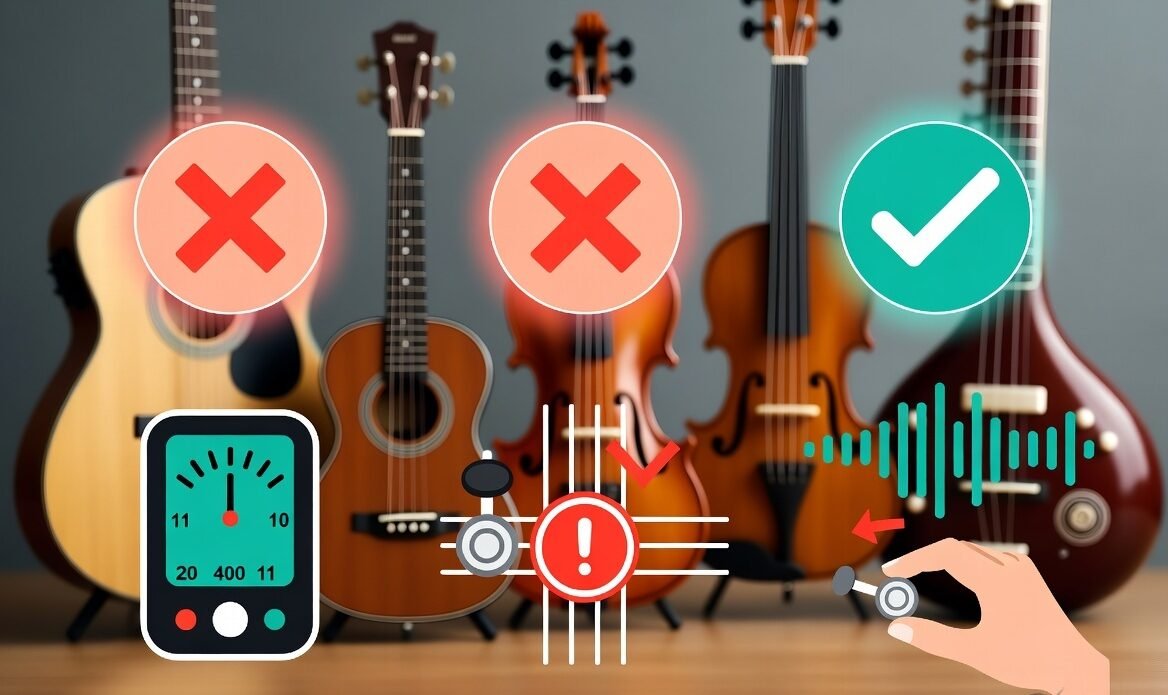
Tuning seems simple — until your instrument keeps going out of tune, strings break, or the sound just doesn’t feel right. Many musicians, especially beginners, make the same avoidable mistakes that lead to frustration, poor intonation, and even damaged instruments.
This guide covers the most common tuning mistakes across popular instruments (guitar, ukulele, violin, sitar, tanpura, and others), explains why they happen, and shows you exactly how to fix or prevent them.
1. Tuning in a Noisy Environment
The Mistake: Trying to tune with a microphone-based app or online tuner in a room with talking, traffic, fans, or other instruments playing.
Why It’s a Problem: Background noise confuses the tuner, causing false readings. You end up chasing an inaccurate pitch.
How to Avoid It:
- Find a quiet space.
- Use a clip-on (vibration) tuner when possible — it ignores ambient sound.
- Cup your hand around the phone mic or move closer to the soundhole/bridge.
2. Not Tuning Up to the Note
The Mistake: Turning the peg or fine tuner past the target pitch and then lowering it, or approaching the note from above.
Why It’s a Problem: Strings (especially nylon, gut, or synthetic) settle better and stay in tune longer when tension is increased to the correct pitch rather than decreased.
How to Avoid It:
If you overshoot, loosen the string below the target note, then slowly bring it up to pitch. This is one of the most important habits for stable tuning.
3. Ignoring Fine Tuners (or Over-Relying on Pegs)
The Mistake (Violin/Viola/Cello): Using the large pegs for tiny adjustments instead of the fine tuners.
The Mistake (Guitar/Ukulele): Forcing large peg turns when only a micro-adjustment is needed.
Why It’s a Problem: Pegs can slip or stick. Fine tuners (or fine-tuning beads on sitar/tanpura) are designed for precision and reduce the risk of sudden pitch jumps or broken strings.
How to Avoid It:
Use pegs only for large changes. Once close, switch to fine tuners or beads.
4. Forgetting to Stretch New Strings
The Mistake: Installing new strings and expecting them to stay in tune immediately.
Why It’s a Problem: New strings (especially nylon, fluorocarbon, or wound strings) stretch significantly during the first few hours or days of playing.
How to Avoid It:
- After installing, gently pull each string upward along its length.
- Tune up, play for a few minutes, retune, and repeat several times.
- Expect to retune frequently for the first 1–3 days.
5. Tuning the Strings in the Wrong Order
The Mistake: Starting with the highest or lowest string randomly instead of following a logical sequence.
Examples of Better Orders:
- Guitar/Ukulele: Often low to high, or starting with a reference string.
- Violin: A → D → G → E (A first as the reference).
- Sitar/Tanpura: Establish Sa (tonic) first, then build the other strings around it.
Why It’s a Problem: Changing tension on one string affects the neck or bridge, slightly altering the pitch of already-tuned strings.
How to Avoid It: Always recheck previously tuned strings after adjusting others.
6. Over-Tightening Strings
The Mistake: Turning the peg aggressively or continuing to tighten when the tuner is already close.
Why It’s a Problem: Strings can break, the neck can warp over time, or pegs can become stuck.
How to Avoid It:
Make very small adjustments. On delicate strings (violin E, sitar main string, ukulele high G/A), use extreme caution. If a string feels unusually tight, stop and double-check the octave/pitch.
7. Not Using a Reliable Reference Pitch
The Mistake: Tuning by ear alone without a reference, or using an out-of-tune piano/guitar as the source.
Why It’s a Problem: Your ear can drift, especially when tired, and relative tuning compounds small errors.
How to Avoid It:
- Use a calibrated chromatic tuner, tuning app, or reliable drone (tanpura app for Indian instruments).
- Confirm A = 440 Hz (or your preferred standard) unless playing with fixed-pitch instruments that require matching.
8. Neglecting Temperature, Humidity, and Instrument Care
The Mistake: Assuming the instrument will stay in tune after sitting in a hot car, cold room, or dry environment.
Why It’s a Problem: Wood expands and contracts; strings react to moisture and temperature. This is especially critical for wooden instruments like violin, sitar, tanpura, and acoustic guitars.
How to Avoid It:
- Store instruments in stable conditions.
- Always check tuning before playing, even if it was perfect the day before.
- Use a humidifier in dry climates for wooden instruments.
9. Incorrect Peg Technique
The Mistake: Turning pegs without pushing them inward (violin family, sitar, tanpura) or winding strings the wrong way.
Why It’s a Problem: Pegs slip, strings unwind, or tuning becomes unstable.
How to Avoid It:
On friction pegs, always apply gentle inward pressure while turning. Wind strings neatly and in the correct direction.
10. Not Double-Checking After Tuning
The Mistake: Tuning each string once and immediately starting to play.
Why It’s a Problem: As overall tension changes, earlier strings drift slightly.
How to Avoid It:
After tuning all strings, play open strings or simple chords/phrases and fine-tune again. Repeat until everything settles.
Quick Reference: Instrument-Specific Tips
| Instrument | Most Common Mistake | Quick Fix |
|---|---|---|
| Guitar | Tuning in noise / not stretching strings | Clip-on tuner + stretch new strings |
| Ukulele | Over-tightening nylon strings | Tune up slowly, stretch gently |
| Violin | Using pegs for tiny adjustments | Prefer fine tuners once close |
| Sitar | Ignoring sympathetic string resonance | Tune tarab strings by resonance |
| Tanpura | Jod strings not perfectly matched | Eliminate beats between the two Sa strings |
Final Thoughts
Most tuning problems come from rushing, poor technique, or environmental factors rather than the instrument itself. By slowing down, using the right tools, always tuning up to the note, and double-checking your work, you will achieve more stable and accurate tuning with far less frustration.
Make these habits part of your routine and your instrument will reward you with better sound, longer string life, and more enjoyable practice sessions.
Tune carefully, listen closely, and play with confidence.