A well-tuned ukulele is essential for that bright, cheerful sound everyone loves. Whether you’re a beginner learning your first chords or an experienced player switching between high-G and low-G setups, a reliable online tuner makes the process quick and accurate. In 2026, the best ukulele tuning websites deliver professional results right in your browser—no apps to download, no hardware required, and completely free.
This comprehensive guide covers how online ukulele tuners work, the top free websites available today, key features to look for, practical tuning tips, and when a physical tuner might still be better.
Why Use an Online Ukulele Tuner?
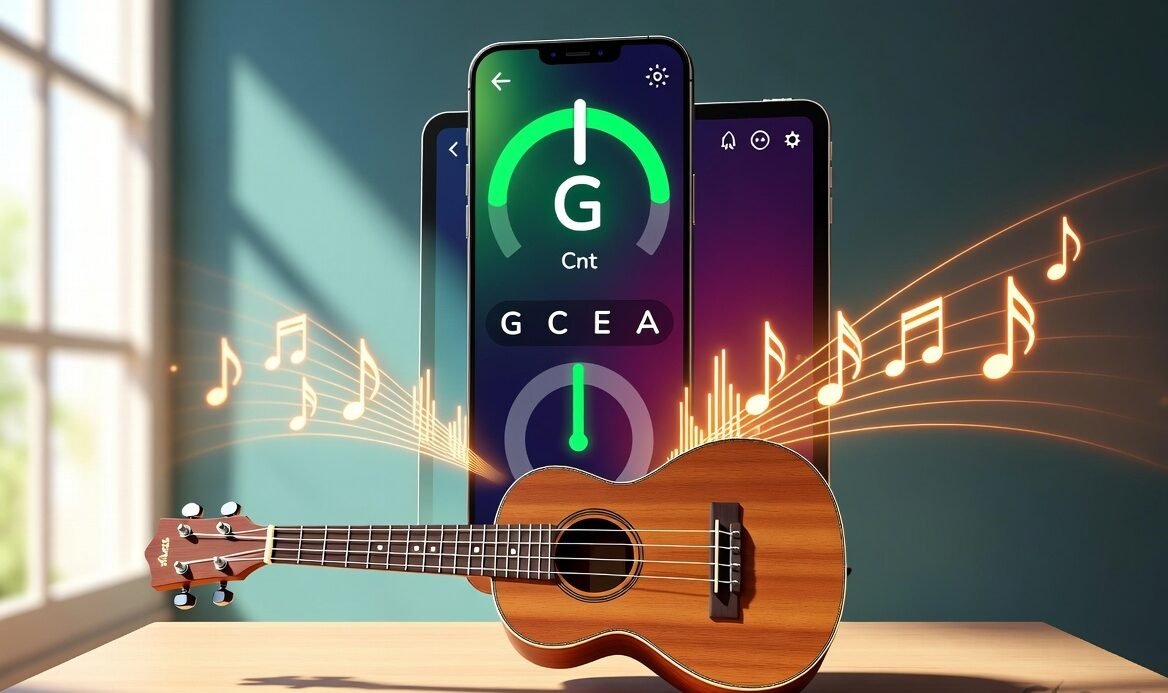
Online ukulele tuners use your device’s microphone and the Web Audio API to detect pitch in real time. They analyze each string’s frequency and show whether it’s sharp, flat, or perfectly in tune—often accurate to within ±1 cent in quiet conditions.
Main benefits:
- Instant access from any modern browser (phone, tablet, or computer)
- Completely free with no downloads or sign-ups
- Support for standard gCEA (re-entrant), low-G (linear), baritone DGBE, and other common tunings
- Privacy-focused (most process audio locally on your device)
- Ideal for home practice, travel, or teaching
Limitations:
- Background noise can reduce accuracy
- Built-in device microphones vary in quality
- Less reliable in loud environments compared to clip-on vibration tuners
How Online Ukulele Tuners Work
- Open the website and allow microphone access when prompted.
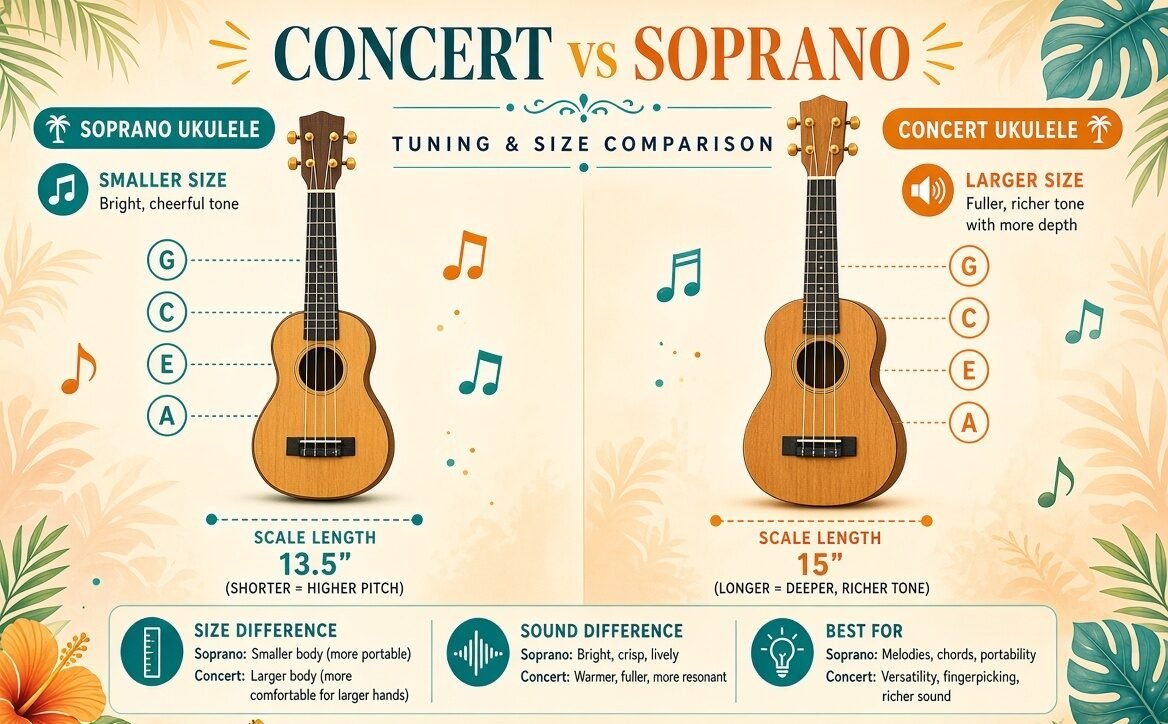
- Select your ukulele size (soprano, concert, tenor, or baritone) and tuning (standard high-G, low-G, etc.).
- Pluck one open string clearly and let it ring.
- Watch the visual indicator (needle, color bar, or meter).
- Adjust the tuning peg until the display centers and turns green.
- Repeat for all four strings, then recheck as the instrument settles.
Many tools also offer reference tones for tuning by ear and chromatic mode for flexibility.
Top Best Ukulele Tuning Websites in 2026
Here are the standout free browser-based options based on accuracy, ukulele-specific features, ease of use, and reliability:
1. Tunerium Online Ukulele Tuner
Best overall specialized ukulele tuner
Tunerium offers a dedicated free online tuner optimized for the ukulele’s bright tone. It defaults to standard gCEA and one-click switches to low-G (GCEA), baritone (DGBE), and other presets. Use the microphone for automatic detection or tap the visual ukulele to hear reference tones. It runs a YIN pitch-detection algorithm adapted for re-entrant ukulele strings, with all audio processed locally.
Pros: Ukulele-focused, mic + ear options, private, multiple popular tunings
Cons: Fewer experimental tunings than general chromatic tools
2. Fender Online Ukulele Tuner
Best for beginners and brand reliability
Fender’s official online ukulele tuner is clean and beginner-friendly. Tap notes to hear reference tones and match your strings by ear, or use it alongside the free Fender Tune app. It supports standard and common alternate tunings with a simple interactive interface.
Pros: Trusted brand, very easy to use, pairs well with Fender Play lessons
Cons: More reference-tone focused than advanced mic detection
3. Fiume Online Ukulele Tuner
Best for all sizes and modern players
Fiume provides a modern, privacy-first tuner that covers soprano, concert, tenor, and baritone ukuleles. It handles both high-G and low-G GCEA plus baritone DGBE. The interface monitors all four strings and jumps to the one you play—no manual selection needed. Audio stays in the browser.
Pros: Excellent multi-size support, auto-detection, clean design
Cons: Newer site with fewer long-term user reviews
4. UkuleleGuitarTuner.com
Best simple microphone tuner
A straightforward free online tool that works with your device microphone for standard GCEA, low-G, and baritone tunings. No signup required and optimized for quick sessions on any device.
Pros: Fast loading, mobile-friendly, completely free
Cons: Basic feature set
5. ChordTools Online Ukulele Tuner
Best private and secure option
This free tuner emphasizes privacy (no server upload) and offers clear needle feedback for GCEA tuning. It works well on desktop and mobile browsers.
Pros: Strong privacy focus, simple and accurate
Cons: Fewer alternate tuning presets
6. GuitarTunePro (Ukulele Mode)
Best multi-instrument option with high accuracy
While primarily known for guitar, GuitarTunePro fully supports ukulele with ±1 cent accuracy using advanced autocorrelation. It includes auto string detection and works across multiple instruments.
Pros: High precision, chromatic capability, free forever
Cons: Interface is more general than ukulele-specific sites
Other solid choices include ukulele-tuner.org (mic or ear modes) and FreeGuitarTuner.net (multi-instrument including ukulele).
Comparison Table: Key Features at a Glance
| Website / Tuner | Best For | Key Tunings Supported | Mic Detection | Ear / Reference Tones | Privacy Focus | Notes |
|---|---|---|---|---|---|---|
| Tunerium | Dedicated uke players | gCEA, Low-G, Baritone + more | Yes | Yes | Strong | Specialized algorithm |
| Fender | Beginners | Standard + common | Limited | Yes | Good | Brand trust |
| Fiume | All sizes | High-G/Low-G GCEA, DGBE | Yes | — | Strong | Auto multi-string |
| UkuleleGuitarTuner.com | Quick sessions | GCEA, Low-G, Baritone | Yes | — | Good | Simple & free |
| ChordTools | Privacy-conscious | GCEA | Yes | — | Excellent | No upload |
| GuitarTunePro | Accuracy seekers | Ukulele + others | Yes | — | Strong | ±1 cent |
Tips for Best Results with Online Ukulele Tuners
- Tune in a quiet room and hold your device near the soundhole.
- Pluck each string firmly and let it ring clearly—mute the others if needed.
- Always tune up to the target note (if you overshoot, go below and come back up) for better stability.
- New strings stretch a lot—retune frequently for the first few days.
- Standard high-G (gCEA) is the classic jangly sound; low-G (GCEA) gives more range for fingerstyle and chords.
- Baritone ukuleles use DGBE (like the bottom four guitar strings).
- Stretch new strings gently and check tuning after playing for a few minutes as the neck settles.
When to Use a Hardware Tuner Instead
Online tools are excellent for practice, but for noisy environments, outdoor jams, or stage use, a clip-on tuner (Snark SN-6X, KLIQ UberTuner, D’Addario NS Micro, or Fender FT-1) is more reliable because it senses vibration rather than sound.
Final Thoughts
The best ukulele tuning website in 2026 depends on your needs. Choose Tunerium for a dedicated, feature-rich ukulele experience, Fender for simplicity and beginner guidance, or Fiume if you switch between different ukulele sizes and tunings often.
Bookmark two or three of these free tools, keep your strings in good condition, and you’ll always be ready to strum. A perfectly tuned ukulele doesn’t just sound better—it makes playing more enjoyable and helps you progress faster.
Happy tuning and aloha!