Starting piano can feel overwhelming, but the right exercises make progress fast and enjoyable. The best beginner piano exercises focus on five key areas: proper hand position, finger strength, independence, coordination between hands, and basic music reading. Consistent short practice with these drills builds a solid technical foundation without frustration.
This guide covers the most effective exercises for absolute beginners, how to practice them correctly, recommended daily routines, and tips to avoid common mistakes.
Why Piano Exercises Matter for Beginners
Exercises develop the physical skills needed to play real music:
- Finger strength and evenness
- Independence (especially the weaker 4th and 5th fingers)
- Hand coordination and independence
- Smooth thumb-under motion for scales
- Rhythm and timing
- Muscle memory and relaxed technique
Just 10–20 minutes of focused exercise work each day produces noticeable improvement within weeks.
Essential Beginner Piano Exercises
1. Five-Finger Patterns (Pentascales)
Best starting exercise for absolute beginners
Place your right-hand thumb on middle C, then fingers 2-3-4-5 on D-E-F-G.
Play slowly up and down: C-D-E-F-G-F-E-D-C.
- Keep fingers curved and relaxed.
- Use a light touch and even volume.
- Repeat with the left hand (pinky on C below middle C).
- Later play both hands together in parallel or contrary motion.
Why it works: Builds basic finger control and introduces the most common hand position used in beginner pieces.
2. Major Scales (Start with C Major)
Once five-finger patterns feel comfortable, move to one-octave scales.
Right-hand C major fingering: 1-2-3-1-2-3-4-5
Left-hand C major fingering: 5-4-3-2-1-3-2-1
Practice slowly with a metronome. Focus on smooth thumb-under motion and even tone. Gradually add other easy keys (G, F, D, A).
Tip: Practice hands separately first, then together.
3. Simple Chord Exercises
Learn basic triads in root position.
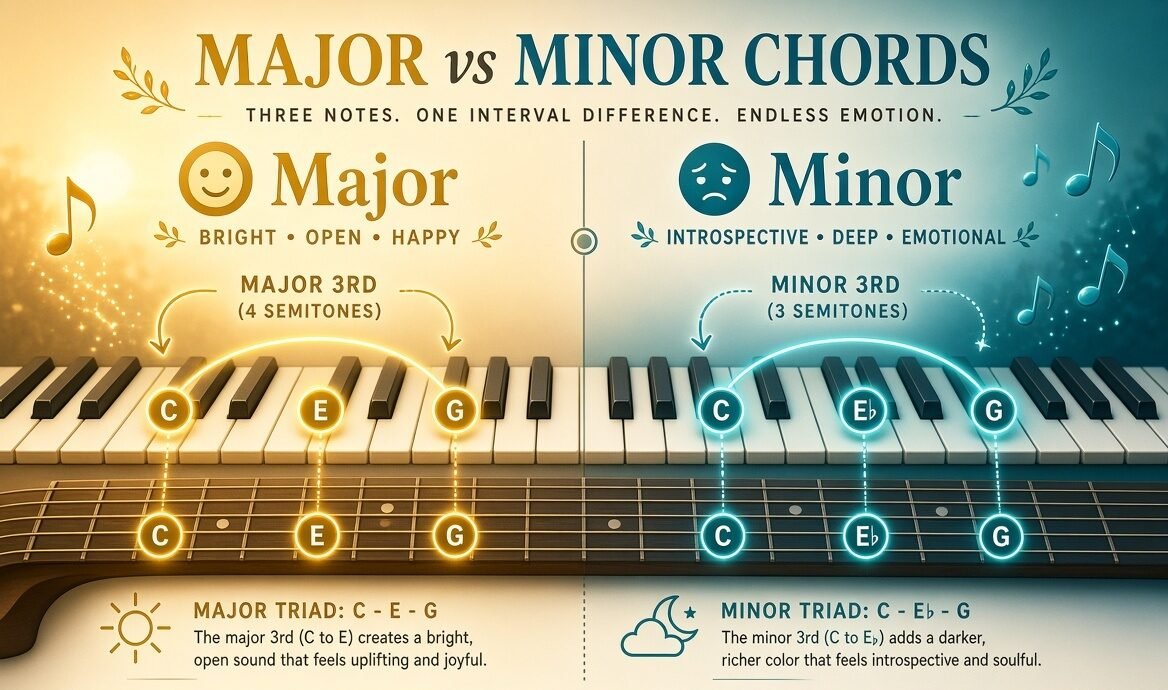
- Right hand: C-E-G (thumb, middle, pinky)
- Left hand: C-E-G (pinky, middle, thumb)
Play blocked chords, then broken chords (arpeggios): C-E-G-E-C.
Practice moving between C, F, and G major chords — the three most useful chords for beginners.
4. Hanon Exercises (Simplified for Beginners)
Charles-Louis Hanon’s The Virtuoso Pianist remains one of the most effective systems. Beginners should start with Exercise No. 1 (or simplified versions).
These repetitive patterns strengthen all fingers equally and improve independence. Play them slowly at first, focusing on evenness rather than speed. Many free beginner-friendly Hanon PDFs and apps are available.
5. Hand Independence Drills
One of the biggest challenges for beginners is making the hands do different things.
Easy starter drills:
- Right hand plays a simple five-finger pattern while left hand holds whole notes.
- Right hand plays quarter notes while left hand plays half notes.
- Contrary motion: both hands start on middle C and move in opposite directions.
6. Rhythm and Coordination Exercises
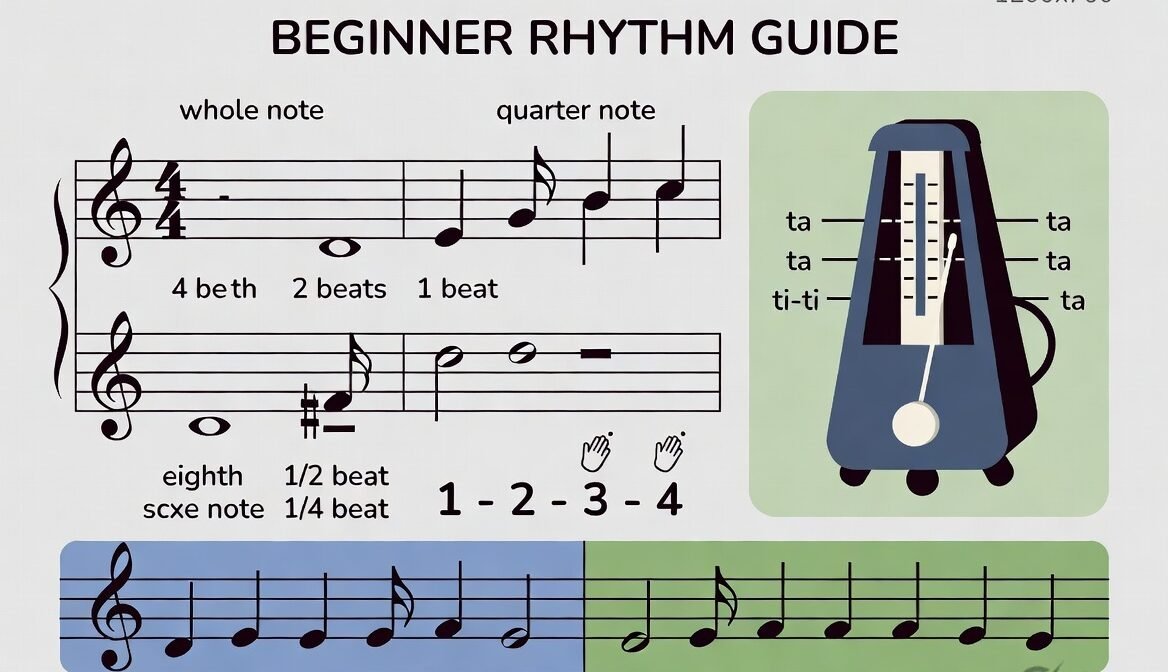
Clap or tap simple rhythms first, then transfer them to the keyboard. Use a metronome from day one. Practice playing the same pattern in both hands, then switch roles (melody in left hand, accompaniment in right).
Sample 15–20 Minute Daily Beginner Routine
- Warm-up (3–4 minutes) – Five-finger patterns, both hands
- Scales & Arpeggios (5 minutes) – C major scale + broken chords
- Finger Independence (4 minutes) – Simple Hanon or 4-5 finger lifts
- Coordination (4–5 minutes) – Hand independence drill or easy chord progression
- Play a short piece (optional) – Apply what you practiced (e.g., “Ode to Joy” or “Twinkle Twinkle”)
Consistency beats long sessions. Daily short practice is far more effective than occasional long ones.
Practice Tips for Faster Progress
- Always use correct posture: sit tall, relaxed shoulders, curved fingers, wrists level.
- Practice slowly. Speed comes naturally after accuracy and evenness.
- Use a metronome to develop steady rhythm.
- Focus on one difficulty at a time (e.g., only evenness, or only smooth thumb-under).
- Record yourself occasionally to hear progress.
- Stop if you feel tension or pain — tension is the enemy of good technique.
- Celebrate small wins to stay motivated.
Common Beginner Mistakes to Avoid
- Playing too fast too soon
- Flat or collapsed fingers
- Raising the wrist or tensing the shoulders
- Ignoring the weaker fingers (4 and 5)
- Skipping hands-separate practice
- Practicing without a clear goal for the session
Recommended Resources
- Free online Hanon exercises and scale sheets
- Apps such as flowkey, Simply Piano, or Skoove (many include built-in exercises)
- YouTube channels with clear visual demonstrations of beginner drills
- A simple metronome app
Final Thoughts
The best beginner piano exercises are simple, focused, and repeated daily. Five-finger patterns, basic scales, chords, light Hanon work, and hand-independence drills form the core foundation that will support everything else you learn.
Start slow, stay relaxed, and be consistent. Within a few weeks you will notice stronger fingers, better control, and greater confidence at the keyboard. These fundamentals turn practice from a struggle into a rewarding daily habit.
Sit down at the piano today, place your hands in C position, and begin with a slow five-finger pattern. Your future playing will thank you.
Happy practicing!