Learning the violin is one of the most rewarding musical journeys you can take. The instrument offers beautiful tone, expressive possibilities, and a rich classical tradition, but it also has a steeper initial learning curve than many other instruments. This complete beginner’s guide walks you through everything you need to know to start correctly and progress with confidence.
1. Choosing Your First Violin
Size matters. Violins come in fractional sizes (1/16, 1/10, 1/8, 1/4, 1/2, 3/4) and full size (4/4). The correct size is determined by your arm length:
- Extend your left arm fully.
- Measure from the base of your neck to the middle of your palm.
- A full-size (4/4) violin usually fits players with an arm length of 23 inches (58 cm) or more.
Recommended for beginners:
- A properly set-up student violin (not the cheapest “toy” instruments).
- Solid wood (not laminated) for better tone as you improve.
- Include a good bow, case, shoulder rest, and rosin.
Renting is often the best option for the first 6–12 months so you can upgrade as you grow or improve.
2. Essential Accessories
- Shoulder rest (critical for comfort and posture)
- Rosin
- Soft cloth for cleaning
- Clip-on chromatic tuner or tuning app
- Music stand
- Metronome (app is fine)
- Extra set of strings
3. Correct Posture and Holding the Violin
Good posture prevents injury and produces better sound.
- Stand (or sit) tall with relaxed shoulders.
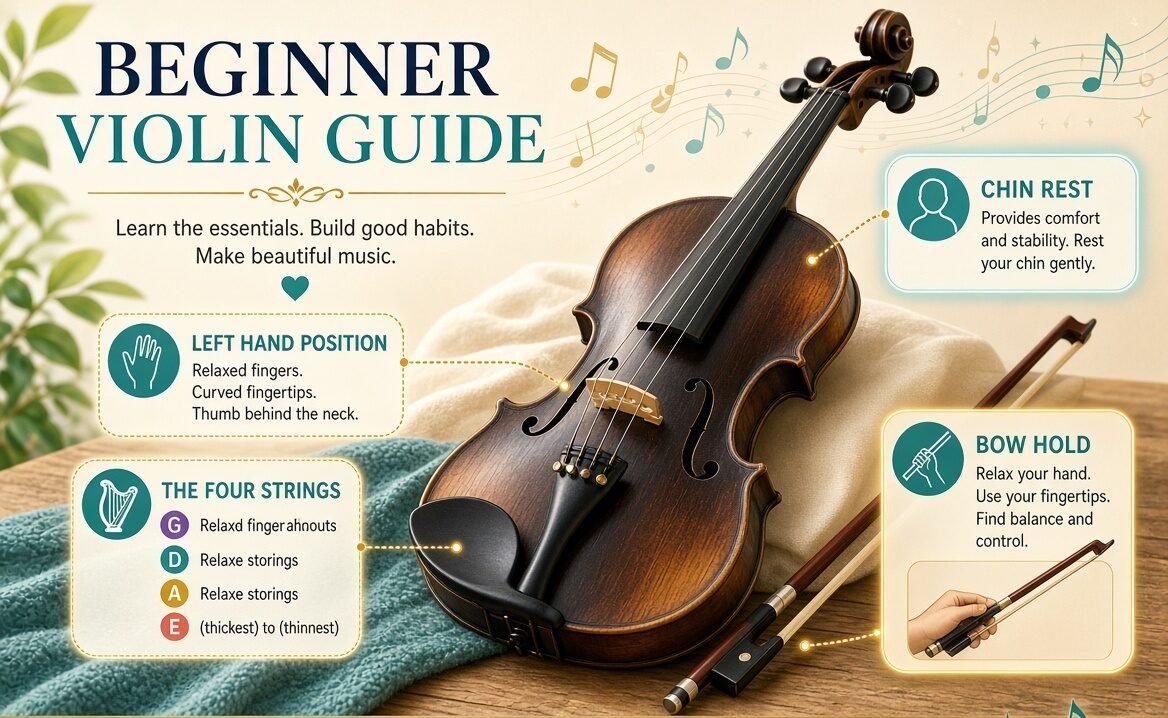
- Place the violin on your left shoulder, supported by the shoulder rest and your jaw (not by gripping with your left hand).
- Your head should look slightly left, resting gently on the chin rest.
- Left arm hangs naturally; the scroll of the violin should point slightly left and upward.
Avoid raising your left shoulder or clamping tightly with your jaw.
4. How to Hold the Bow
A relaxed bow hold is one of the most important foundations:
- Place the bow stick across the first joint of your fingers.
- Thumb bends gently and sits opposite the middle finger on the stick.
- Fingers curve naturally over the stick.
- Wrist stays flexible.
Practice the bow hold away from the violin until it feels natural.
5. The Four Strings
From lowest to highest pitch (thickest to thinnest):
G – D – A – E
Standard tuning is in perfect fifths. Most beginners start by learning notes on the A and D strings first.
6. Basic Tuning for Beginners
Use a clip-on chromatic tuner or a reliable app.
- Tune the A string first (usually to 440 Hz).
- Then tune D, G, and E relative to A or by using the tuner on each string.
- Use fine tuners for small adjustments. Use the pegs only for larger changes, always pushing inward while turning.
New strings stretch — expect to retune frequently during the first week.
7. First Exercises to Practice Daily
Week 1–2 Focus:
- Open string bows (long, steady strokes on each string)
- Simple finger placement on A and D strings (first finger, then second, etc.)
- Keeping a straight bow path parallel to the bridge
Essential early exercises:
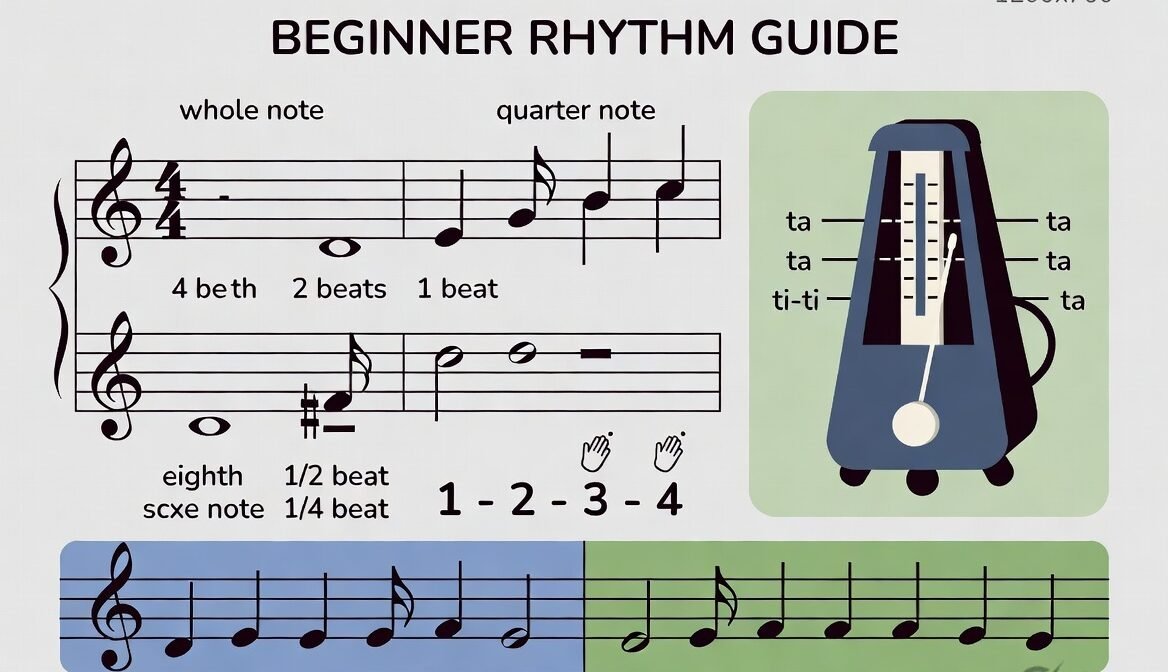
- Open string whole notes and half notes
- Finger pattern 0-1-2-3 on A and D strings
- Simple two-note combinations
- Basic scales once fingers are more secure (start with A major or D major)
Always play with a relaxed left hand — fingers should fall from above, not squeeze.
8. Recommended Daily Practice Routine (20–40 minutes)
| Time | Activity | Purpose |
|---|---|---|
| 3–5 min | Posture & bow hold check | Build good habits |
| 5 min | Open string long bows | Tone and bow control |
| 8–10 min | Finger exercises & simple patterns | Left-hand accuracy |
| 5–10 min | Easy pieces or scales | Musical application |
| 2–3 min | Review & stretch | Cool down |
Consistency is far more important than long practice sessions.
9. Common Beginner Mistakes to Avoid
- Gripping the neck too tightly with the left hand
- Raising the left shoulder
- Crooked bow (not parallel to the bridge)
- Pressing the bow too hard into the string
- Looking down at the fingers constantly
- Skipping proper tuning
10. How Long Until It Sounds Good?
Most beginners produce a clearer tone within 4–8 weeks of regular practice. Pleasant, controlled playing usually develops over 3–6 months. Progress depends heavily on consistent, focused practice and good guidance (teacher or high-quality online method).
11. Learning Resources for Beginners
- A qualified private teacher (highly recommended)
- Method books: Essential Elements, Suzuki Book 1, or String Builder
- Online platforms with structured video lessons
- Tuner and metronome apps
- Simple beginner pieces and folk songs
Final Tips for Success
- Prioritize relaxation over volume or speed.
- Record yourself occasionally — it reveals issues you don’t notice while playing.
- Keep your violin clean and stored properly in its case.
- Celebrate small wins (clear open strings, first in-tune finger, first simple song).
- Be patient. The violin rewards persistence more than almost any other instrument.
Starting the violin is a commitment, but the musical rewards are immense. Focus on good posture, a relaxed bow hold, accurate tuning, and daily short practice sessions. With consistent effort, you will steadily develop a beautiful tone and the ability to play the music you love.
Welcome to the violin world — enjoy every step of the journey.