When choosing or switching between a soprano and a concert ukulele, one of the first questions players ask is: “Is the tuning different?”
The short answer is no — both instruments use the same standard tuning. The longer answer reveals important differences in how that tuning feels, sounds, and performs because of size, scale length, and string tension.
This guide explains everything you need to know about Concert vs Soprano tuning, including practical implications for playing, string choice, and tone.
Standard Tuning for Both
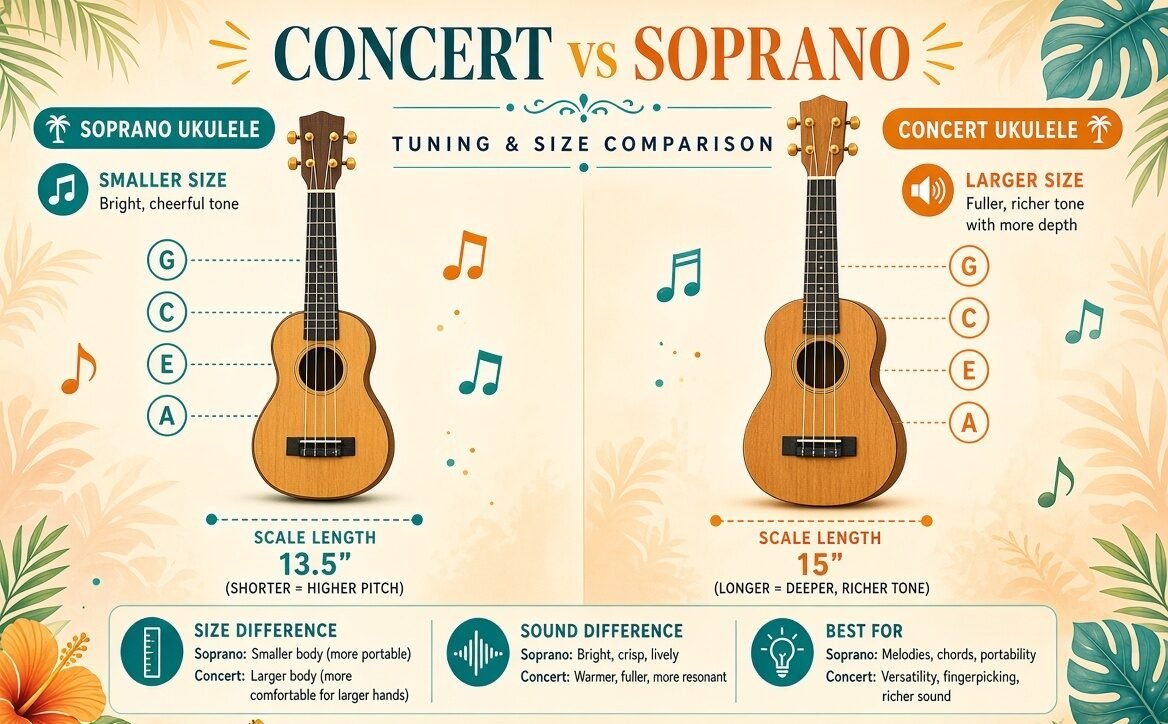
Both Soprano and Concert ukuleles are standardly tuned to:
g – C – E – A
(from the string closest to your face to the string closest to the floor)
- The g is usually a high G (re-entrant tuning), one octave higher than a low G.
- This creates the classic bright, cheerful “ukulele” sound.
You can play the exact same chord shapes and read the same tabs on both instruments. Songs transfer perfectly between them.
Key Differences That Affect Tuning Feel
| Feature | Soprano Ukulele | Concert Ukulele |
|---|---|---|
| Overall Length | ~21 inches (53 cm) | ~23 inches (58 cm) |
| Scale Length | ~13 inches (33 cm) | ~15 inches (38 cm) |
| Number of Frets | 12–15 | 15–20 |
| String Tension | Lower (for same pitch) | Slightly higher |
| Tone Character | Bright, jangly, traditional | Fuller, warmer, more volume |
| Fret Spacing | Closer together | More comfortable, wider |
| Best For | Small hands, traditional sound, travel | Most adult beginners, fingerstyle |
Scale Length & String Tension
The longer scale length of a concert ukulele means the strings are under slightly higher tension when tuned to the same pitch. This often feels more stable and can make bending or hard strumming less likely to pull the strings out of tune.
Soprano ukuleles have lower tension, which contributes to their lighter, “plinky” feel but can make them more sensitive to temperature and aggressive playing.
Re-entrant vs Linear (Low-G) Tuning
Both sizes traditionally use re-entrant (high-G) tuning.
Many players (especially on concert and tenor) prefer linear tuning by installing a low-G string. This gives a fuller, more guitar-like range. Low-G works on both sizes but is more common and often more satisfying on the larger-bodied concert because of its greater resonance.
How Size Affects the Sound of the Same Tuning
Even though the notes are identical, the instruments sound different:
- Soprano: Bright, focused, classic Hawaiian “jangly” tone. Excellent for traditional strumming and that iconic ukulele character.
- Concert: Noticeably more volume, warmer midrange, and better low-end response. The larger body projects more and feels fuller when playing the same GCEA chords.
Practical Tuning Tips for Each Size
Soprano
- Use strings specifically designed for soprano scale length.
- Be gentle when tuning up — lower tension means strings can feel looser.
- Check tuning more frequently in changing temperature or humidity.
- High-G is the traditional and most common choice.
Concert
- Benefits from slightly higher tension; holds tuning a bit better under vigorous playing.
- Excellent platform for experimenting with low-G strings.
- Wider fret spacing makes precise intonation easier up the neck.
- Still uses the same GCEA reference pitches as the soprano.
Which Should You Choose?
- Choose Soprano if you want maximum portability, the classic bright sound, or have smaller hands.
- Choose Concert if you prefer more comfort, louder projection, a warmer tone, or plan to play fingerstyle or in groups.
Many players eventually own both because they offer complementary voices while sharing the exact same tuning system.
Final Thoughts
Concert and Soprano ukuleles speak the same musical language — GCEA. The differences lie in body size, scale length, string tension, volume, and tonal color rather than the actual notes you tune to.
Understanding these nuances helps you select the right instrument and get the best sound from whichever size you play. Whether you love the traditional sparkle of a soprano or the fuller voice of a concert, both will serve you well once properly tuned.
Tune carefully, play with joy, and enjoy the unique character each size brings to the same beloved tuning.